|
Gardens Ablaze |
||
|
|
Hydrangea
|
|
|
Detailed Shrub & Hedge Plant Profiles Site Map
Home
|
If you are in Zone 4-10 and are in search of a hard-working, attractive late spring/early summer-flowering shrub for your landscape, one or a combination of Hydrangeas may turn out to be the perfect solution for you! Hydrangeas come in a variety of shapes, sizes, and flower colors, and unlike many flowering shrubs they actually prefer a bit of shade, making them the perfect shrub choice for softening the lines of the house or using along a fence line. The leaves of most types also work well as a backdrop in dappled shade areas along with other shrubs and flowers. As an added bonus, most Hydrangeas change colors in the fall, adding extra color and interest to the landscape.
In the warmer parts of the country (Zones 5-10) - virtually all of the Hydrangeas will do well with basic watering, fertilization, and occasionally some winter protection. The most popular specimen in southern gardens (Zone 6 and up) is the Bigleaf or French Hydrangea - Hydrangea Macrophylla - the one pictured above. It sports large round flowerheads in blue, pink or white that can be seen from a long way off in mid-summer. The leaves are large and dark green, making them a nice background for smaller-leaved plants and flowers. The color of the blooms is influenced by the pH of the soil - blue if acid and pink if alkaline. To influence the color for blue, use egg shells, coffee grounds, or ground-up citrus peels in the soil. I have also heard people swear on pine straw as a good way to influence acid soil. To influence pink blooms, fertilize with an alkaline fertilizer or maybe just a bit of lime. Be sure not to overdo, as these plants still need a fairly acid soil. The fall color of the Bigleaf Hydrangea is a nice gold-yellow. Plan for a large plant when mature - somewhere around 6 feet high by 6 feet wide. The more sun, the more flowers, but these Hydrangeas prefer to be somewhat sheltered from the sun in the hottest part of the day, with a southern exposure or dappled shade the ideal. Moist but well-drained soil works well, and although I have seen well-sheltered specimens flourish throughout the hot summer here with no care or watering at all, this is not usually the case. In fact, when the dog days of summer roll in, you may very well come home to find a sad looking, wilted plant waiting for you. In this case, just give it some water and within a few hours it will have recovered nicely with no lasting adverse effects. Bigleaf Hydrangea may very well spread slowly from its original planting location. Mine definitely has. In fact, the original plant has died off and a whole new set of plants have taken its place. You can dig these volunteers and plant somewhere else, or just leave them for a more lush appearance to the overall scene. Propagating by stem cuttings is easy with Bigleaf Hydrangea - just cut a young shoot and place in moist potting soil. Situate in the shade for a few months and you will have a whole new plant. Of course, it takes several years to grow to full size, but hey, it's a free plant! Prune the Bigleaf Hydrangea sparingly, as next year's flowers grow on the old wood from this year. Deadhead old flowers and do any necessary maintenance pruning before September. The dried flowers of Bigleaf Hydrangeas are favorites of florists, holding their colors admirably and lending themselves well to all sorts of crafts, including dried vase arrangements, wreaths, basket arrangements, etc. Another attractive type of Hydrangea that is hardy to zone 5 is the Oakleaf Hydrangea - Hydrangea Quercifolia. This is a popular garden shrub that has oak-like leaves and showy attractive cone-shaped, cream-colored flowers iin June and July, often with a slight hint of pink. The fall color is an attractive burgundy, and the bark adds winter interest with an orange-brown color and some peeling effect. This shrub grows quite large, making it unsuitable as a foundation planting for all but the largest of homes, but it works very well as an attractive screen or large specimen plant, with interest for all seasons. The Oakleaf Hydrangea blooms on old wood, so if it needs pruning, this must be done by mid-July, and even then only to remove broken branches and tidy up the plant. As with the Bigleaf Hydrangea, it appreciates a bit of protection from the hottest sun, but unlike the Bigleafs, they will not respond to attempts to influence flower color. Hydrangea Arborescen - Hills-of-Snow or Smooth Hydrangea - is a very popular type of Hydrangea that is hardy to Zone 4. It quickly grows to approximately 5 feet and produces profuse rounded white blooms from June to September. The flowers change in color from apple green to snow white as they mature, and then become a papery tannish color and persist into the winter for interest. They are heavy, and often need support or they will droop to the ground. Provide support early in the growing season unless you desire a "weeping" effect, which can also be quite attractive. Smooth Hydrangeas produce bloom on new wood, making them much more hardy than the Oakleaf and Bigleaf varieties. Prune basically any time of year to keep the plant tidy, but do the main hard pruning from fall to spring. Clumps can be divided in the spring if they become too large. This variety tolerates full sun better than the others, but will also do well in part shade. The Panicle Hydrangea, or Hydrangea Paniculata is the largest of the group, hardy to Zone 4, and often growing to 10 feet or more. This type can actually be pruned into a small tree shape, and also makes a wonderful large flowering screen or hedge. It blooms profusely in mid-summer, producing cone-shaped cream-colored flowers that persist into the fall and winter in a semi-dry state. As with the Smooth Hydrangea, the flowers often become too heavy, causing branches to droop somewhat. New blooms form on new wood, and therefore minor maintenance pruning can be done anytime during the growing season, but the plant should be cut almost to the ground in late winter or spring, as left to its own devices, it will quickly outgrow its bounds. The Climbing Hydrangea - Hydrangea Anomala Petiolaris - is an absolutely wonderful (and big) climbing vine that can eventually reach 75 feet or more in height if it has the room. It can be used as a screen over a fence, as a ground cover in partly shady areas, as a climber around large trees, and as a way to beautify unsightly landscape problems such as rock piles or tree stumps. It climbs via aerial rootlets, bears flattened clusters of white flowers, and blooms in late spring to early summer. Mature specimens in full bloom are amazingly beautiful to behold and are also quite fragrant. Climbing Hydrangea foliage turns to a burnt orange color in the fall, and the exfoliating bark makes it a good winter interest specimen. It requires little pruning, but won't complain if you prune to keep it within bounds.
Planting a New Hydrangea
Propagation
Medicinal Uses of Hydrangea The root is the part of the Hydrangea plant that is used internally for medicinal purposes, and fresh root can be dug in the fall and used as a syrup with honey and sugar, or simply steeped in water and drunk as a tea. The root becomes quite hard and difficult to work with once harvested, so cut into pieces and dry for long-term use. Obviously, commercial preparations can also be purchased, and I have provided a few links at the top right for those who would rather not go to the trouble of digging up their prized Hydrangea roots! Externally, Hydrangea bark can be peeled and used as a compress or ointment for treatment of bruises, burns, sprains, and sore muscles. For more information and specifics on exactly how to go about making home remedies from fresh Hydrangea root, please see the sections for other root herbs such as Angelica, Ginseng, and Echinacea, as well as the Herbal Teas, and Oils and Ointments sections. More information on Hydrangeas is available in the Gardening QA Section. Click here to see what other gardeners are asking.

Custom Search
|
|
|
Gardens Ablaze |
||
 If
you have arrived here from the
If
you have arrived here from the 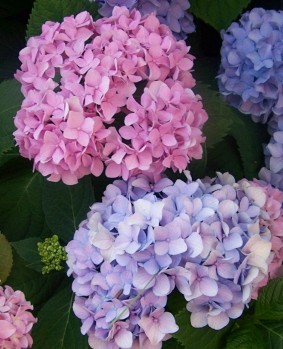 Choosing your new Hydrangea wisely and
knowing how to take care of mature specimens is the key to having basically
carefree color and form in your garden for years to come.
Choosing your new Hydrangea wisely and
knowing how to take care of mature specimens is the key to having basically
carefree color and form in your garden for years to come.