|
Gardens Ablaze |
||
|
|
Medicinal
Uses of Echinacea |
|
|
Additional Echinacea Information
Growing Echinacea Site Map
Home |
Echinacea also appears to be useful for a plethora of other common ailments, and a tea can be made to reduce symptoms of scratchy or sore throat, lymph node inflammation, stomach cramps, and urinary tract infections. There is some indication that it is beneficial in cancer patients, helping to rejuvenate the system after chemotherapy, and it is widely used as a general blood purifier. Externally, it can be made into an Ointment for treatment of insect bites, burns, measles, skin ulcers, herpes sores, cold sores, and yeast infections in women. The Indians swore by it as being an effective anti-venom agent for snakebites, but this hasn't been conclusively proven. It would sure be worth a try in a situation with no doctors close by, however. Echinacea is safe to use other than for people with allergies to members of the daisy family. A doctor should be consulted first for people with AIDS, HIV, or other immune system problems.

Custom Search
|
|
|
Gardens Ablaze |
||
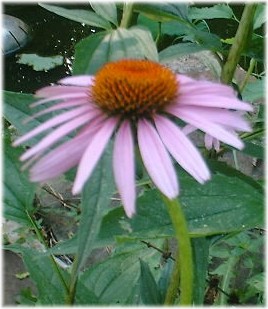 Echinacea
is well known for its anti-viral, anti-bacterial, anti-fungal, and anti-inflammatory
properties. It is commonly recommended by herbalists as an agent to
lessen the symptoms and duration at the onset of a cold or the flu.
Liquid form seems to be the most effective way, taken in a
Echinacea
is well known for its anti-viral, anti-bacterial, anti-fungal, and anti-inflammatory
properties. It is commonly recommended by herbalists as an agent to
lessen the symptoms and duration at the onset of a cold or the flu.
Liquid form seems to be the most effective way, taken in a