|
Gardens Ablaze |
||
|
|
Rose of Sharon
|
|
|
Detailed Shrub & Hedge Plant Profiles Site Map
Home |
Rose of Sharon lends itself to many landscape uses, and depending on how it is maintained can function as a shrub, small tree, screening plant, or as a lovely mid-summer focal point. Like all hibiscus relatives, the flowers only last one day, so it's not a great cutting flower type of plant, but the blooms are profuse, and the plant is a welcome addition to the late summer garden when many other plants are past their primes. Rose of Sharon is incredibly easy to grow, and though like most plants it prefers a loamy soil, it will survive and even excel in all but the very worst garden soil scenarios. It will survive dependably to zone 5, but some winter dieback may occur if the temperature goes below approximately 20 degrees below zero. It has a naturally vase-like shape, but if left to grow unrestricted, it will eventually become gracefully arched. It is a large shrub when mature (12 feet tall x 10 feet wide) but it responds well to hard pruning, and can even be pruned into an attractive tree form.
Rose of Sharon flowers come in shades of pink, white, and violet. The flowers are edible, with a somewhat nutty flavor, and make great garnishes for meat or salad dishes. Bees and other beneficial insects love this plant, making it an excellent choice for a habitat-like situation. As far as pruning, the best time to prune is in late winter or early spring before the plant breaks dormancy. Flowers grow from new wood, so you can prune as heavily as needed without losing any flowering if you do it before the start of the growing season.

Custom Search
|
|
|
Gardens Ablaze |
||
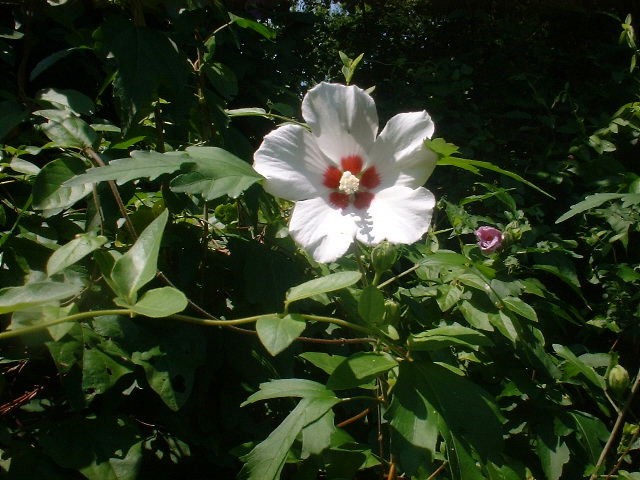 If
you are in search of a quick-growing, durable, vigorous, carefree flowering
shrub, Rose of Sharon just may be the perfect choice for you.
If
you are in search of a quick-growing, durable, vigorous, carefree flowering
shrub, Rose of Sharon just may be the perfect choice for you.
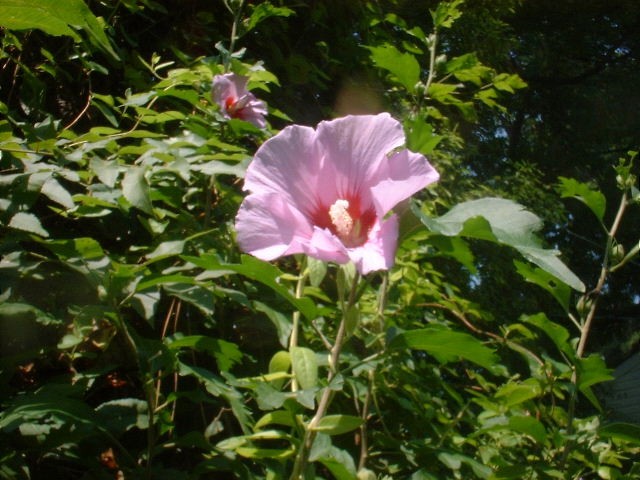 Rose
of Sharon makes a quick growing screen for those needing an attractive privacy
solution in a hurry, and can be propagated easily by collecting seed once
flowering has finished. It can also be propagated by softwood cuttings,
although cuttings can sometimes be difficult and will take a bit of nurturing
at first.
Rose
of Sharon makes a quick growing screen for those needing an attractive privacy
solution in a hurry, and can be propagated easily by collecting seed once
flowering has finished. It can also be propagated by softwood cuttings,
although cuttings can sometimes be difficult and will take a bit of nurturing
at first.