|
Gardens Ablaze |
||
|
|
Shasta Daisy Always remember you are absolutely unique. Just like everyone else. - Margaret Meade |
SerenityHealth Wall Fountains Stunning Wall Water Fountains Many styles and sizes to choose from. |
|
Additional Perennial Profiles Site Map
Home |
Shasta daisies are quite easy to grow from seed, but be aware that they will probably not bloom until their second season. From then on, however, they will multiply rapidly, requiring dividing every few years, which is the only real down side to growing this fabulous perennial plant. If not divided, they will eventually crowd themselves out, producing smaller flowers and stunted plants. They make wonderful companions for other daisies, such as black-eyed Susans and purple coneflower, and are often found in perennial seed mixes. Shasta daisies are perennials that prefer a well drained, sunny site, but will perform admirably under less than perfect conditions. They belong to the large Aster family, and characteristically will under-perform if the soil retains too much water. They prefer a rich soil, but in my garden they perform beautifully in an area with soil that leaves a lot to be desired. Deadheading is desirable when time permits (cut the stalk down to the ground), and will prolong the blooming season as well as keep the plants looking healthy and well kept.
Finally, as noted above, Shastas make wonderful cut flowers, and both the flowers and the leaves are edible. The leaves can be mixed with greens in salads, and the showy flowers make wonderful garnishes for most any dish. There are no known uses for this plant medicinally, so it is grown as an ornamental, but it is edible and it is a fairly close relative of the venerable Echinacea, so further study definitely needs to be done in this area.

Custom Search
|
|
|
Gardens Ablaze |
||
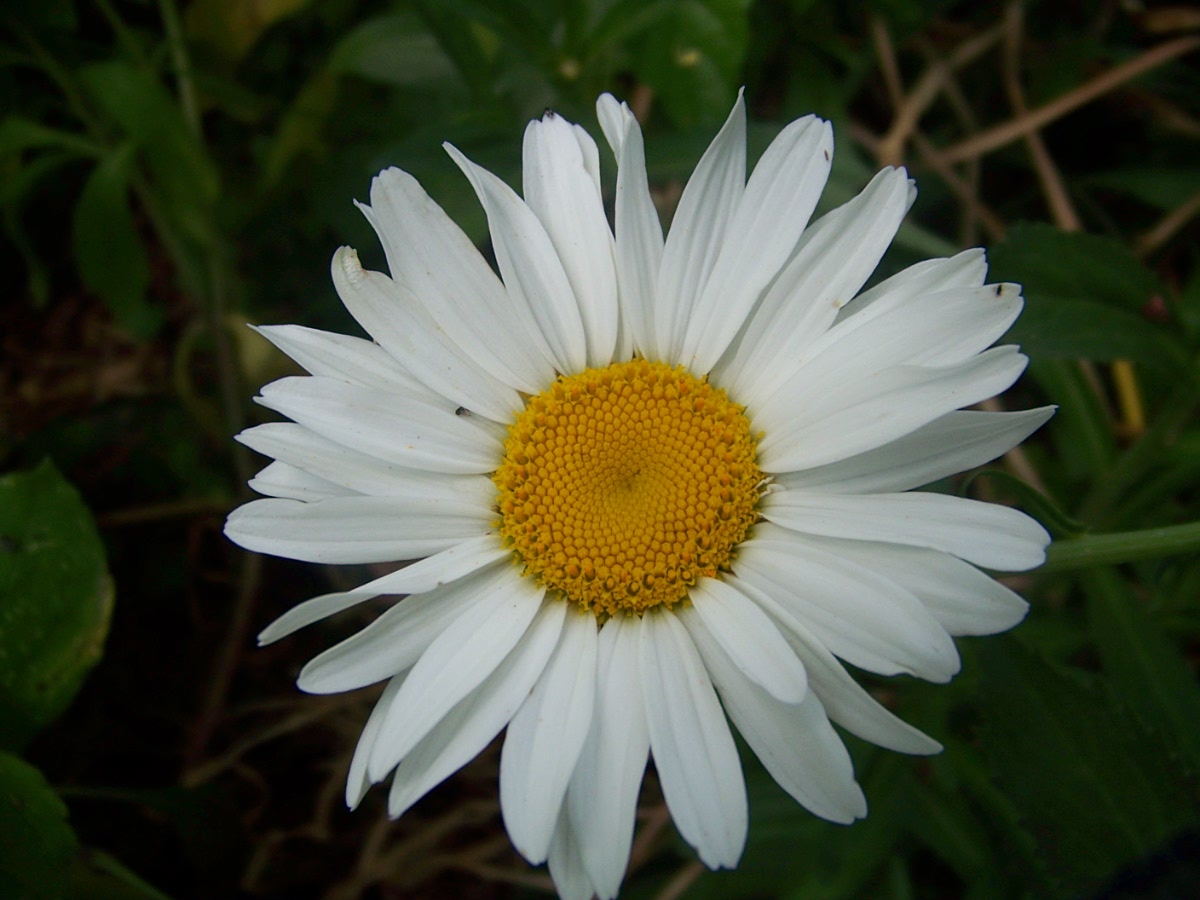 Shasta
daisies are easy to grow cottage garden mainstays that return thicker and
more luxuriant year after year. Once established, these plants make
an excellent ground cover, as the thick foliage remains green all year.
These are hardy plants to zone 4 or 5, that make a definite statement in
a mixed border, perennial bed, or mass planting. They are easy care
and are bothered by practically no pests, and they make wonderful, thick-stemmed
cut flowers.
Shasta
daisies are easy to grow cottage garden mainstays that return thicker and
more luxuriant year after year. Once established, these plants make
an excellent ground cover, as the thick foliage remains green all year.
These are hardy plants to zone 4 or 5, that make a definite statement in
a mixed border, perennial bed, or mass planting. They are easy care
and are bothered by practically no pests, and they make wonderful, thick-stemmed
cut flowers.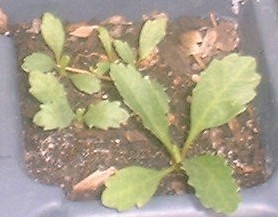 Shastas
can be propagated by division or planting seed in the fall or early spring.
To the left is a picture of seedlings for identification purposes.
Shastas
can be propagated by division or planting seed in the fall or early spring.
To the left is a picture of seedlings for identification purposes.