|
Gardens Ablaze |
||
|
|
Iris |
1 Free Iris with any order,
code 1399 |
|
Detailed Bulb Profiles Site Map
Home
|
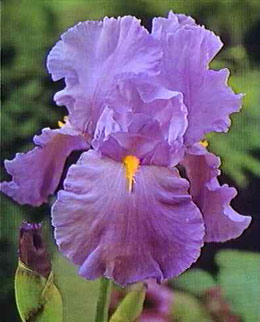
Iris types include plants that grow from both bulbs and rhizomes. Dutch Iris is of the bulb type, and rhizomatous types include Siberian, Japanese, Louisiana, Pacific, and Bearded Irises. It helps to understand the types when choosing an appropriate Iris for the garden, so here goes: Bearded Iris - Pictured above. Well recognized by the distinctive "beards" on the lower parts of the flowers. There are six distinct types of Bearded Iris, plus the newer "reblooming" cultivars. Flower colors span every hue in the rainbow. Bearded Iris prefers well-drained soil and 5-8 hours of sunlight a day. Areas with too much shade will produce spindly plants with few blooms. -Miniature Dwarf Bearded - small 2" to 8", early bloom, front of border -Standard Dwarf Bearded - small 8" to 15", early bloom, near front of border -Intermediate Bearded - medium 16" to 28", tall enough for cutting, early bloom -Border Bearded - medium 16" to 28", tell enough for cutting, later bloom -Miniature Tall Bearded - 28" up, fairly small flowers, later bloom, good cut flowers -Tall Bearded - 28" up, larger flowers, later bloom, most popular of the Beardeds -Reblooming Bearded - dependable rebloomers 2-3 times a season.
Siberian Iris - Excellent garden plants growing 2 to 4 feet. Graceful blue-green leaves that sometimes turn reddish in the fall. Flower colors range from blue to white and make good cut flowers. Once established, Siberian Iris can remain in place for years with little care. This plant has few pest problems and will tolerate a wide variety of soil conditions. Japanese Iris - These are the most spectacular of the Irises with the biggest, frilliest blooms at 4-8" across. They bloom about a month later than the Siberians and Beardeds. They are robust growers and need a lot of water, sunlight, and nutrients. Good upkeep of their garden bed with heavy mulch to retain moisture will result in increased bloom size and quality, more so than with any of the other irises.
Irises have few problems but occasionally Iris borer damage can occur. The Iris borer is a caterpillar that grows up to about 2 inches long. It spends its winter in an egg form nestled in old Iris leaves. In the spring the caterpillars climb up the leaves and then tunnel back down towards the rhizome. The leaves will have pinprick sized holes and tan streaks. Borers can weaken the plant and cause other problems, such as funguses and rot. Borers are difficult to control once a plant is infested, and good housekeeping in the fall and close inspection in the spring are good ways to head off any problems. If borers are found, pick them off or remove the entire leaf and discard. Insecticides are a last resort. 
Custom Search
|
|
|
Gardens Ablaze |
||
 Pick
an Iris - any Iris! There's a place for this versatile plant in every
gardening situation, bar none. These long-lived perennials produce
long, graceful sword-shaped foliage that make a nice contrast to lower-growing
flowers and plants even when the flowers are not in bloom. There are hundreds
of types in every color of the rainbow, and some will even naturalize if
given the right conditions.
Pick
an Iris - any Iris! There's a place for this versatile plant in every
gardening situation, bar none. These long-lived perennials produce
long, graceful sword-shaped foliage that make a nice contrast to lower-growing
flowers and plants even when the flowers are not in bloom. There are hundreds
of types in every color of the rainbow, and some will even naturalize if
given the right conditions.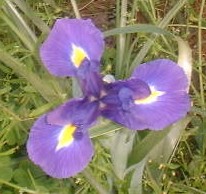 Dutch
Iris - Pictured to the right. Grown from bulbs, these Irises are planted
in the fall for spring and summer bloom. Color range not as extensive
as for the Bearded Iris, but still a nice color selection, with shades of
blue, yellow, and white. Easy cultivation, reliable bloom, great cut
flower. Needs well-drained soil and 5-8 hours of sunlight a day.
Will naturalize when given the right conditions.
Dutch
Iris - Pictured to the right. Grown from bulbs, these Irises are planted
in the fall for spring and summer bloom. Color range not as extensive
as for the Bearded Iris, but still a nice color selection, with shades of
blue, yellow, and white. Easy cultivation, reliable bloom, great cut
flower. Needs well-drained soil and 5-8 hours of sunlight a day.
Will naturalize when given the right conditions. 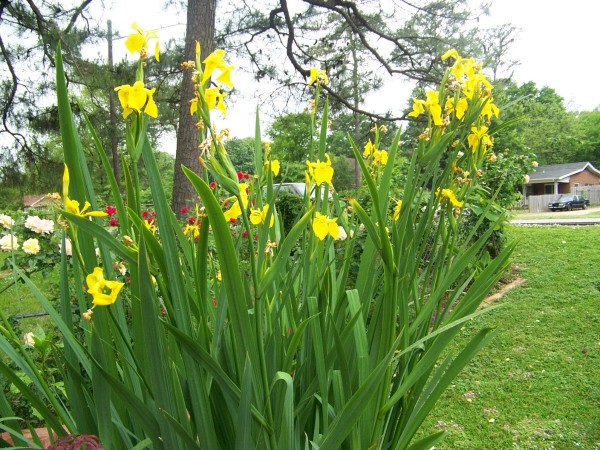 Water or Flag Iris - Yellow Flag
and Blue Flag Iris are staples in many water gardens, and with good reason.
They are easy care, love neglect, and will survive submerged in water year
round, in bog conditions, and in a drier garden situation. The provide
upright form in backyard ponds that few other plants have, and their flowers
are bright and noticeable. They spread on their own quite quickly
and become full and thick in minimal time.
Water or Flag Iris - Yellow Flag
and Blue Flag Iris are staples in many water gardens, and with good reason.
They are easy care, love neglect, and will survive submerged in water year
round, in bog conditions, and in a drier garden situation. The provide
upright form in backyard ponds that few other plants have, and their flowers
are bright and noticeable. They spread on their own quite quickly
and become full and thick in minimal time.