|
Gardens Ablaze |
||
|
|
Lavender
|
|
|
Additional Lavender Information
Medicinal Uses Site Map
Home
|
Lavender is a perennial member of the large mint family and does well in situations with full sun and dry, well-drained, average soil. Though there are around 30 varieties, the most popular for the home garden are the hardy English and more tender French and Spanish types. English lavender is considered the top choice for fragrance purposes, but all the lavenders make lovely, fragrant additions to almost any type of home situation, as long as they are given very well-drained soil and lots of sunlight. Though English lavender can make it through the winter if given some shelter from the elements and a good protective mulch, the French and Spanish types should be moved inside or replaced yearly.
Though we are all aware of the fragrant properties of the lavenders, these plants also make useful additions to the medicine cabinet and are often used in various craft projects. The flowers can be candied for use in decorating cakes and confections (see Violet for instructions), and the leaves can be substituted for Rosemary in chicken dishes, but otherwise Lavender is not used widely in cooking. The flower spikes make wonderful additions to dried and fresh flower arrangements, the oils make for the best in aromatherapy and are used medicinally and for homemade bed and bath items, and the attractive, bushy habit makes Lavender a natural for many different types of garden situations. The stems, once stripped of leaves and flowers can be burned like an incense stick for a wonderful room freshener. Additionally, this is a plant that attracts bees and beneficial insects. For specifics on other uses for this wonderful herb, please see the links above. More information on Lavender is available in the Gardening QA Section. Click here to see what other gardeners are asking. 
Custom Search
|
|
|
Gardens Ablaze | ||
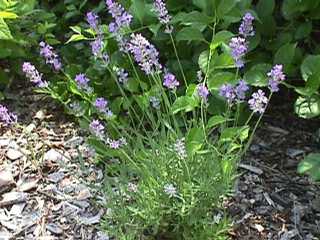 Lavender
is the quintessential English or cottage garden plant, and is a must for the
perennial or herb garden. It has grayish looking lance-shaped leaves that
make a good backdrop for other plants and flowers, and the wonderful fragrant
purple, pink, or white flowers make it an excellent choice for walkways or in
containers near doorways or on porches or decks.
Lavender
is the quintessential English or cottage garden plant, and is a must for the
perennial or herb garden. It has grayish looking lance-shaped leaves that
make a good backdrop for other plants and flowers, and the wonderful fragrant
purple, pink, or white flowers make it an excellent choice for walkways or in
containers near doorways or on porches or decks.  Lavender
is difficult to raise from seed because of the long germination time, and most
plants are started from cuttings or from root division. Cuttings 2-3
inches long can be taken from side shoots in the summer and placed in moist but
very well-drained sand or soil. Keep in a shady area or under some sort of
sun shield, and plant in the garden after about one year. During the first
year in the garden, keep flower shoots cut off to help the plant bush out, but
in subsequent years, it can be allowed to bloom freely. Lavender
appreciates deadheading of the spent flowers to keep it productive.
Harvesting should be done on a hot, dry day at the end of summer for the best
oils and fragrance.
Lavender
is difficult to raise from seed because of the long germination time, and most
plants are started from cuttings or from root division. Cuttings 2-3
inches long can be taken from side shoots in the summer and placed in moist but
very well-drained sand or soil. Keep in a shady area or under some sort of
sun shield, and plant in the garden after about one year. During the first
year in the garden, keep flower shoots cut off to help the plant bush out, but
in subsequent years, it can be allowed to bloom freely. Lavender
appreciates deadheading of the spent flowers to keep it productive.
Harvesting should be done on a hot, dry day at the end of summer for the best
oils and fragrance.