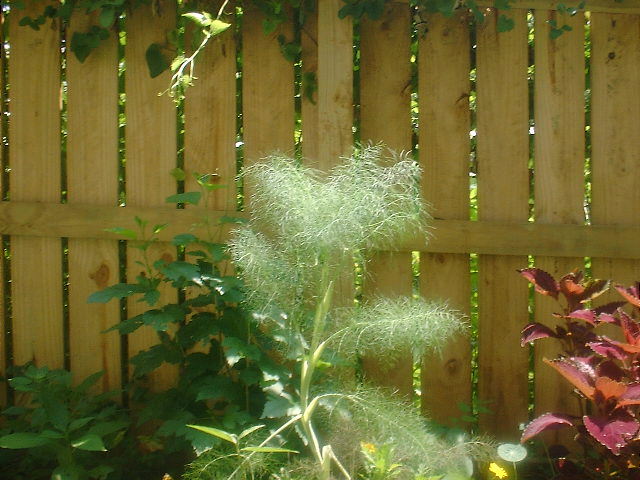
 Dill
is an annual herb,
and is native to southern Europe. It looks like a smaller version
of its relative, Fennel.
It grows to 36 inches and has attractive, silver-green feathery leaves.
The seed is sharp, and has a more pungent flavor than the leaves, which
are mildly tangy. It is used to flavor vinegars, mustard-based sauces,
and dressings. It also works with tomatoes, fish (especially Salmon),
eggs, pickles (obviously), salads, and vegetables.
Dill
is an annual herb,
and is native to southern Europe. It looks like a smaller version
of its relative, Fennel.
It grows to 36 inches and has attractive, silver-green feathery leaves.
The seed is sharp, and has a more pungent flavor than the leaves, which
are mildly tangy. It is used to flavor vinegars, mustard-based sauces,
and dressings. It also works with tomatoes, fish (especially Salmon),
eggs, pickles (obviously), salads, and vegetables.
In the garden, Dill makes a nice, feathery backdrop for other plants. It
also makes a good companion plant for some other herbs and vegetables, and
bees are attracted to its flowers. Please see
Companion Planting
for further information. When deciding on a location, remember that
Dill self seeds readily and the chances are good
that new plants will come up in the same location next year. Seeds
are best sown in the ground, as it transplants poorly. It prefers
a moderately rich, well drained soil and full sun. Seeds can be harvested
2-3 weeks after the plant blossoms, and are a light brown color. Fresh
leaves can be picked before the plant flowers, and can also be dried, but
fresh is preferable. Stems can be frozen, snipped as needed, and then
returned to the freezer.
Harvest Dill seed when the seed heads
become thoroughly brown. A photograph of a cut stalk of ready-to-go
seed is below. Store in a breathable container, such as an envelope,
at least for the first few weeks. This ensures that the seeds are
completely dry, after which they can be transferred to an airtight container
without concern for mold.

