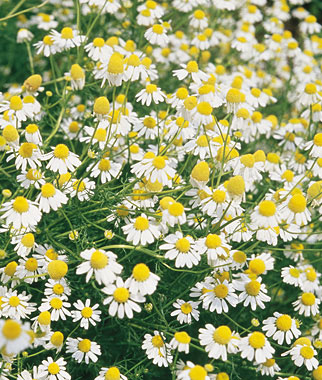
 Chamomile
is an annual
fragrant herb, the flowers of which make a wonderful, soothing tea. It originates
in southern and eastern Europe. It is a member of the daisy family and its
flowers have a bitter taste. Only use the first 3-4 inches of foliage
or the flowers of this plant. The rest is unusable. Other than
for teas, Chamomile is mainly used for medicinal purposes.
Chamomile
is an annual
fragrant herb, the flowers of which make a wonderful, soothing tea. It originates
in southern and eastern Europe. It is a member of the daisy family and its
flowers have a bitter taste. Only use the first 3-4 inches of foliage
or the flowers of this plant. The rest is unusable. Other than
for teas, Chamomile is mainly used for medicinal purposes.
Chamomile fragrance is reminiscent of apples. It grows readily in
less than perfect conditions and can be used as a
Ground Cover.
It has silver-white flowers with yellow centers. German chamomile
is the most frequently used type for medicinal purposes.
Chamomile can be sown in the garden in either fall or spring. Seed
viability is increased by freezing and thawing, and therefore planting in
fall is preferable. It appreciates full sun and evenly moist soil,
and it will reseed freely if some flower heads are left on the plant.
When harvesting for teas, pick the flowers for drying when the petals are
at their peak and begin to turn back on the flower disk. Use only
fresh flowers, as older flowers have lost most of their beneficial oils.
Remove as much green material as possible, and dry on screens in the shade.
Store in airtight containers and use as needed.
