|
Gardens Ablaze |
||
|
|
Aloe Vera |
|
|
Additional Aloe Information
Medicinal Uses Site Map
Home |
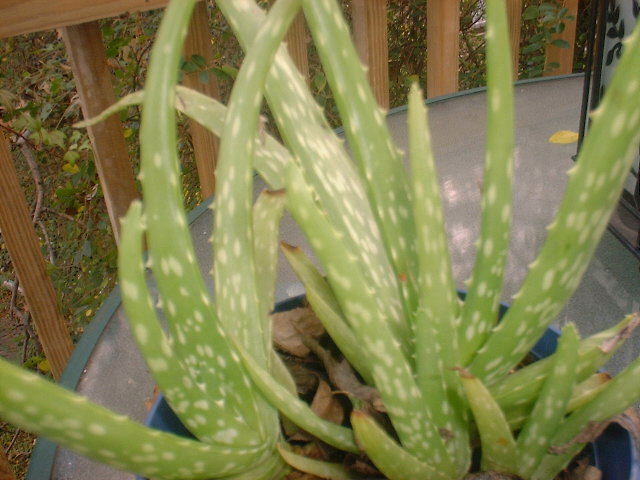
Aloe has a nauseating bitter taste, rendering it unusable in cooking, but this very property is what protects it in the wild, as animals will move on to tastier treats. It is an easy plant to grow and requires little care, other than protecting it from frost. It resembles a cactus with its spiny, thick leaves, but it is really a member of the lily and onion families. Aloe requires temperatures above 40 degrees to grow properly, and due to this, most aloe plants are grown in containers that can be moved indoors when the cool weather approaches. Aloe will tolerate poor soil and little water, and the growing conditions very much resemble those used for growing cactus, i.e. good drainage and as much sun as possible. In spring and summer, allow the soil to become moderately dry before watering, but in winter, let the soil dry completely before adding water. An aloe plant will survive in the same pot for many years, and it appears that aloes prefer somewhat crowded roots, so don't think you are doing this plant a favor by potting it up in a big, roomy container. If you must repot this plant, do it in the late winter or spring. Aloe can be propagated by seed or by removing the offshoots that grow at the base of the plant. The best way to remove these offshoots is to take the entire plant out of the pot, then separate the offshoots from the parent plant (they should have some roots of their own), returning the parent plant to its original container. Harvest the older outer leaves first and use to soothe skin problems. Please see Medicinal Uses below for further details.

Custom Search
|
|
|
Gardens Ablaze |
||
 I
have done a lot of research
on a lot of herbs for this web site, but when I started looking at the Aloe
Vera plant, I was truly amazed. Aloe is one of the true heavyweights
in medicinal herbs, and there is a surprising amount of good research regarding
its benefits, which is not the case with many of the other herbs.
If you don't have an aloe plant sitting on your kitchen windowsill, make
it a point to pick one up next time you are out and about, because this
is one truly amazing plant!
I
have done a lot of research
on a lot of herbs for this web site, but when I started looking at the Aloe
Vera plant, I was truly amazed. Aloe is one of the true heavyweights
in medicinal herbs, and there is a surprising amount of good research regarding
its benefits, which is not the case with many of the other herbs.
If you don't have an aloe plant sitting on your kitchen windowsill, make
it a point to pick one up next time you are out and about, because this
is one truly amazing plant!